Magdalena Więcek. The Rise

September 26–October 26, 2024

Olszewski Gallery. Warsaw Gallery Weekend

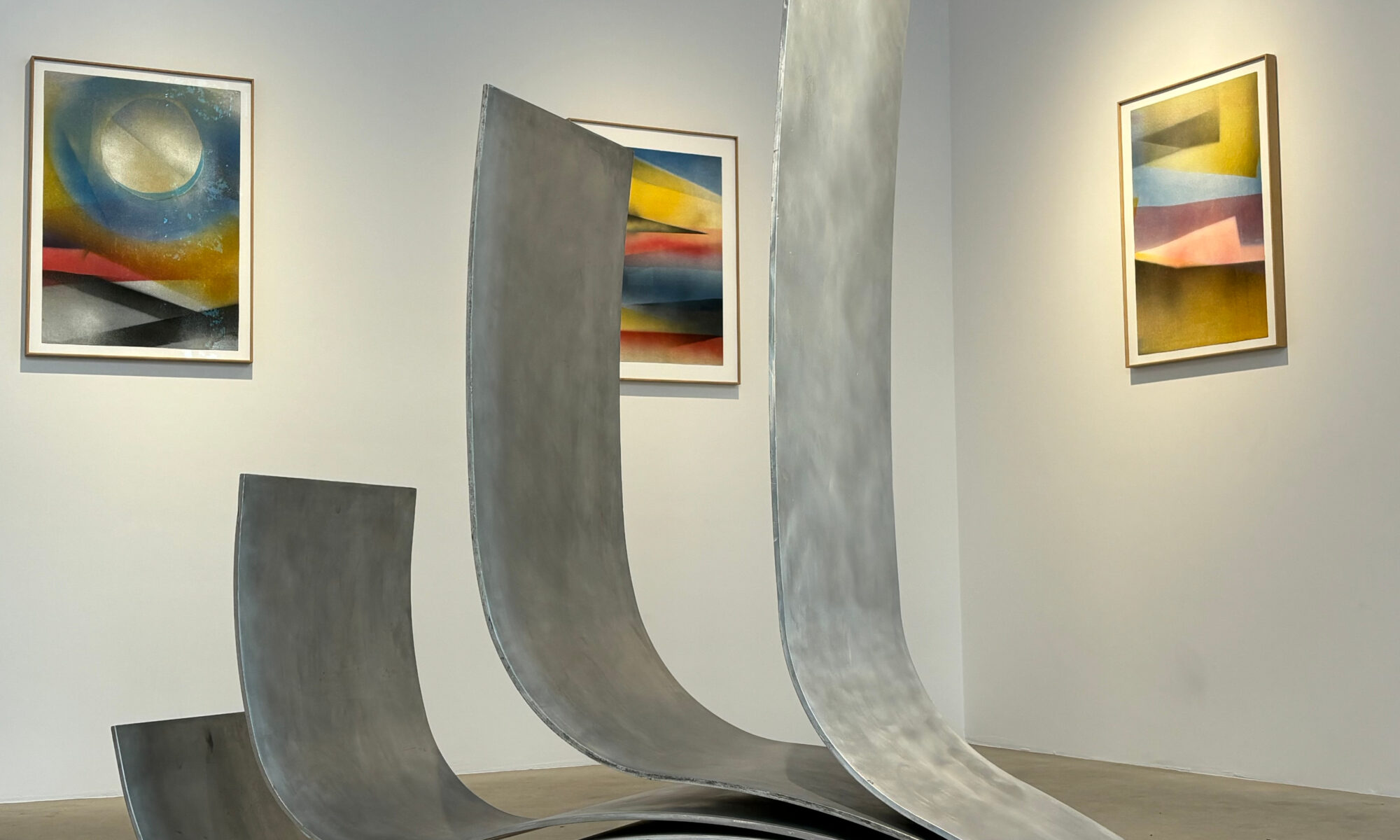
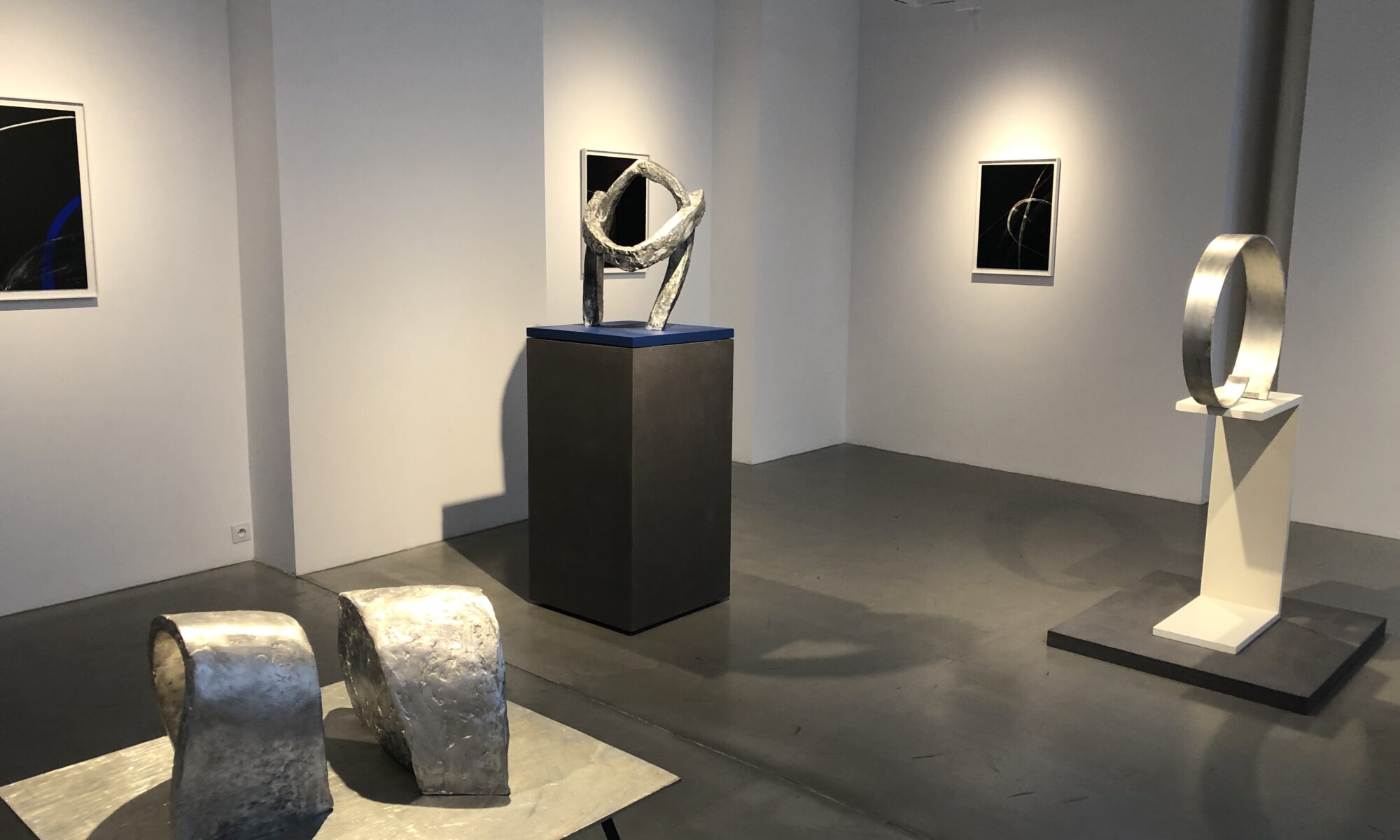
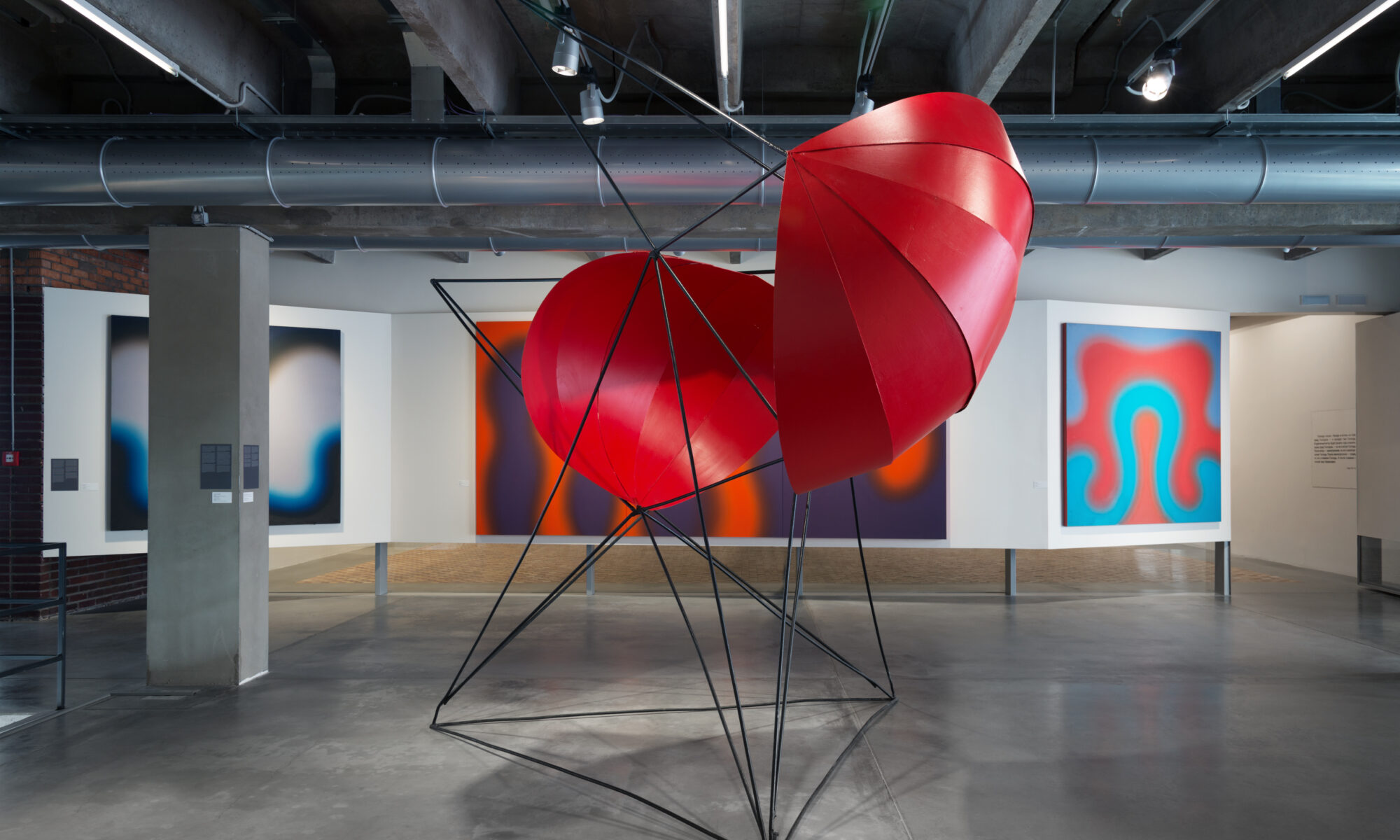
“The Rise” is an abstract, minimalist interpretation of its title. Strips of aluminium sheets seem to slowly detach from the ground and reach towards the sun. Więcek plays with the viewer, giving the metal form a paradoxical lightness. The title and form of the sculpture suggest further interpretations the longer we engage with it. Its very construction resembles a kind of graph, and it is surely no coincidence that at its highest point, it reaches the height of an adult human. Accompanying the sculpture, works on paper from the „Horizons” series, were created with an airbrush and are constituting a unique study of light. They are forming a backdrop to the story about the question of space and its dynamics. The changing kaleidoscope of interpenetrating colours emphasises Magdalena Więcek’s creative sensitivity.

Curator: Dorota Grubba

Więcek x Gierowski

December 1 – January 31, 2023

Olszewski Gallery. Warsaw

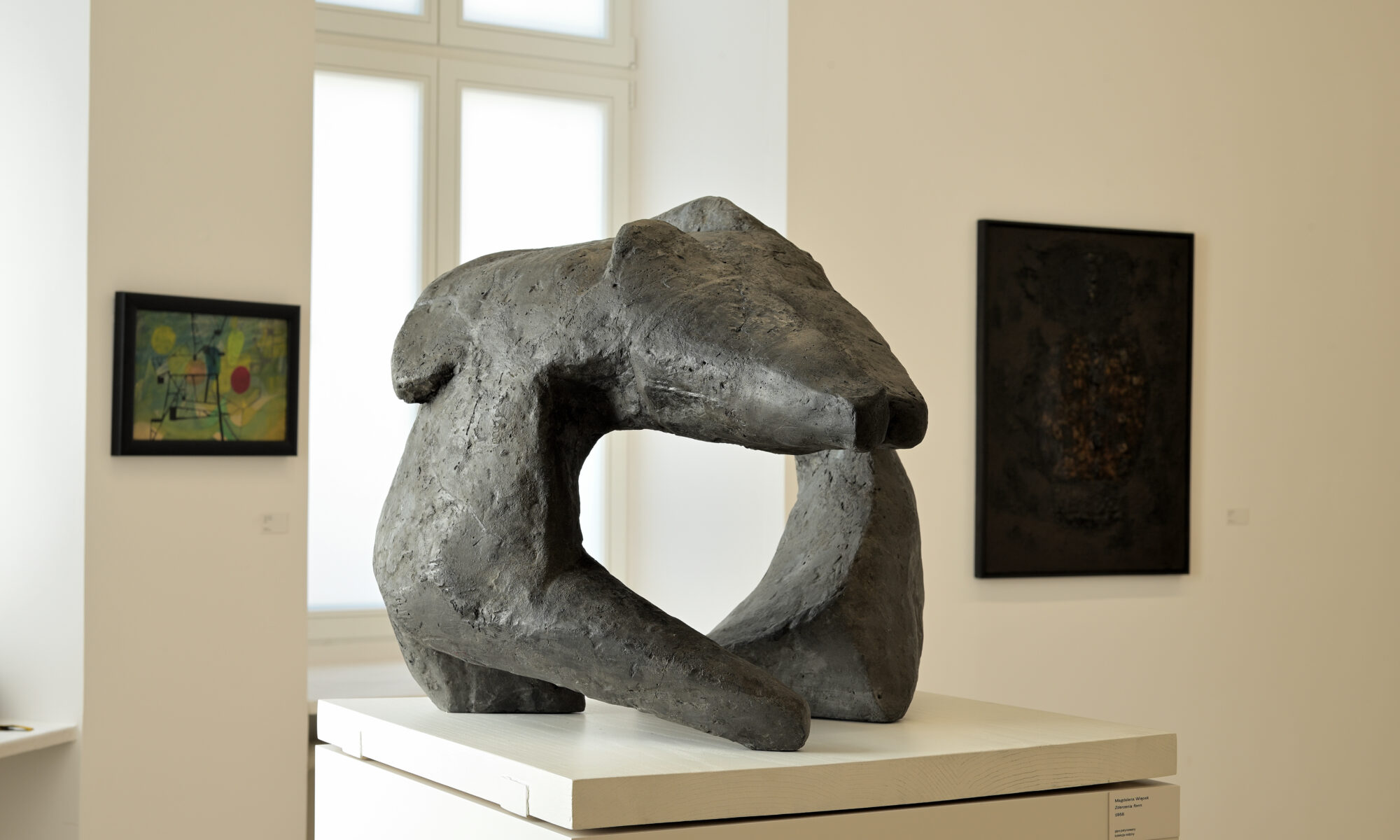
„I feel sculpture as such an absolute concrete, object, always a three-dimensional physical fact, that even if it expresses an abstract thought, you can easily trip over its realness. I can never see it fully, you must either turn the sculpture around or mince around it. There is nothing similar to the comfort of watching an easel painting”.

excerpt from “For Magdalena” Stefan Gierowski, Warsaw, 5th July 1993

Confrontations and Arguments. Modern art according to the assumptions of the Krzywe Koło Gallery

March 21 – June 20, 2021

Stefan Gierowski Foundation, Warsaw

The place for modern art, marked by the artists of the Krzywe Koło Gallery, is directly related to a number of creative activities of the Polish interwar avant-garde. Freedom of creative expression has become the music of the new times. The artists, without clearly referring to any of the existing trends, adopted the following as their basic principle: art does not have to result from content, but from color and form, sensitivity and composition, expression and gesture. The contribution of Polish artists to the creative achievements of the second half of the 20th century was quickly noticed and even faster forgotten. The transformations of the ability to see and feel resulting from their activity still do not find their proper place in the opinions of critics and historians, and in the consciousness of researchers of this period they exist only virtually.

Janusz Zagrodzki

Artists: Zdzisław Beksiński / Henryk Berlewi / Marian Bogusz / Václav Boštík / Vladimir Boudnik / Urszula Broll / Janusz Maria Brzeski / Tadeusz Brzozowski / Leon Chwistek / Marian Čunderlik / Zbigniew Dłubak / Jan Dobkowski / Tadeusz Dominik / Wojciech Fangor / Jerzy Fedorowicz / Stanisław Fijałkowski / Stefan Gierowski / Zbigniew Gostomski / Jerzy Grzegorzewski / Ryszard Grzyb / Tihamér Gyarmathy / Edward Hartwig / Karol Hiller / Jan Hrynkowski / Jerzy Hulewicz / Maria Jarema / Tadeusz Kantor / Bronisław Kierzkowski / Katarzyna Kobro / Aleksander Kobzdej / Edward Krasiński / Jerzy Kujawski / Lech Kunka / Jan Lebenstein / Alfred Lenica / Jerzy Lewczyński / Julian Lewin / Stanisław Łabęcki / Andrzej Łobodziński / Maria Ewa Łunkiewicz-Rogoyska / Zbigniew Makowski / Kazimierz Malewicz / Adam Marczyński / Jarosław Modzelewski / Jerzy Nowosielski / Roman Opałka / Edward Ovčaček / Włodzimierz Pawlak / Andrzej Pawłowski / Teresa Pągowska / Ludmiła Popiel / Piotr Potworowski / Teresa Rudowicz / Zofia Rydet / Bronisław Schlabs / Małgorzata Schuster-Kubicka / Władysław Skotarek / Marek Sobczyk / Kajetan Sosnowski / Henryk Stażewski / Jonasz Stern / Władysław Strzemiński / Szymon Syrkus / Alina Szapocznikow / Samuel Szczekacz / Mieczysław Szczuka / Pinkus Szwarc / Alina Ślesińska / Jan Tarasin / Jerzy Tchórzewski / Teresa Tyszkiewicz / Andrzej Urbanowicz / Miloš Urbásek / Stefan Wegner / Magdalena Więcek / Ryszard Winiarski / Ryszard Woźniak / Jan Jerzy Wroniecki / Andrzej Wróblewski / Jerzy „Jurry” Zieliński / Rajmund Ziemski / Teresa Żarnowerówna

Female minimal: Abstraction in the expanded field

October 30 – December 18, 2020

Galerie Thaddaeus Ropac. London

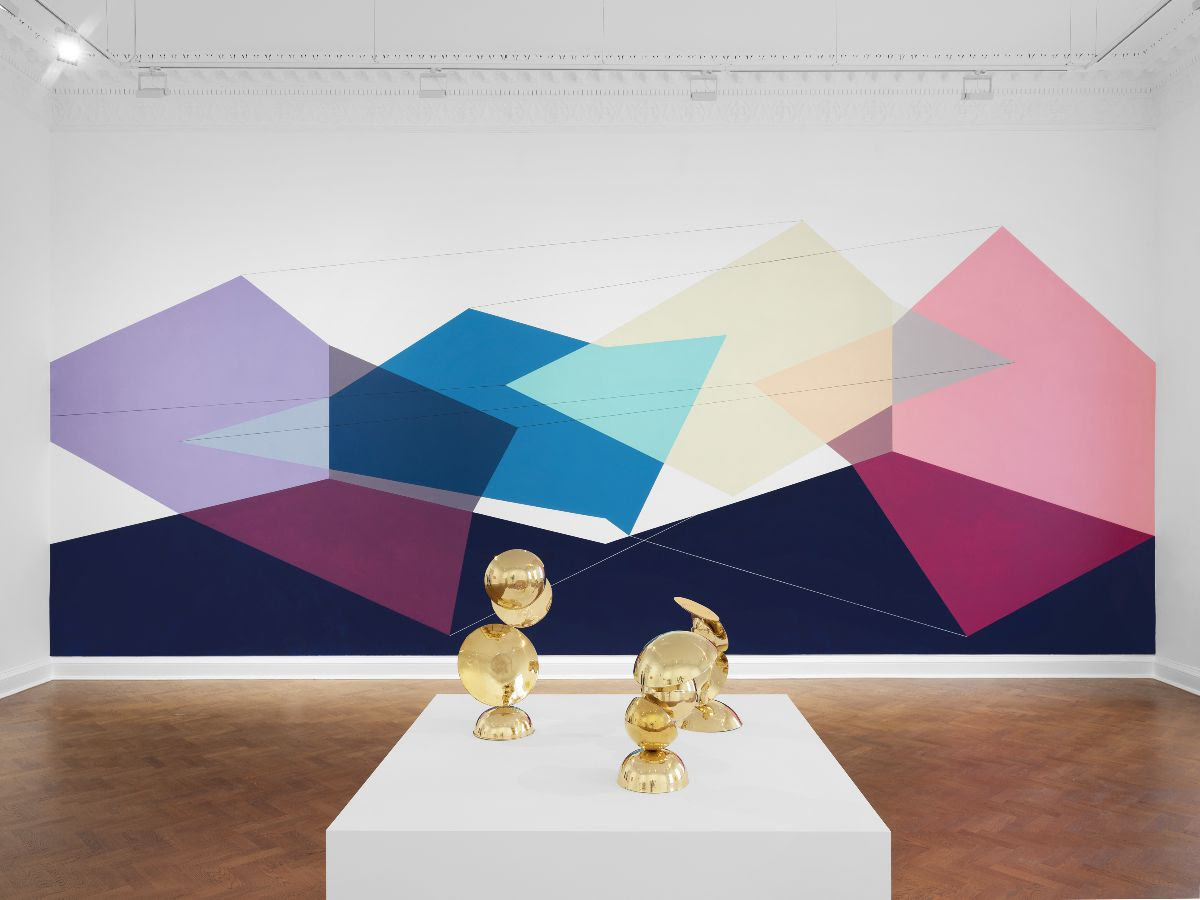
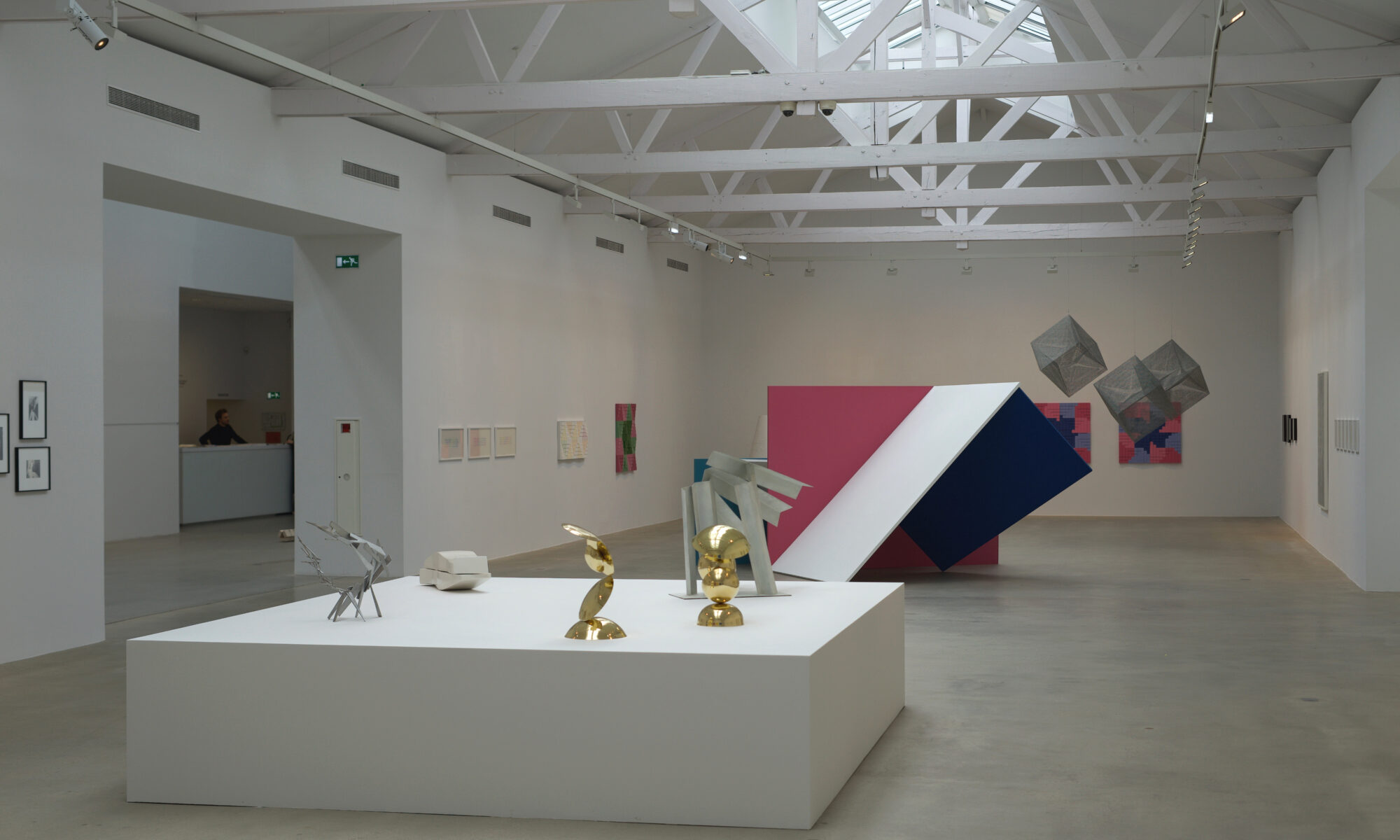
Female Minimal: Abstraction in the Expanded Field brings together pioneering female artists from Europe and the Americas who each contributed in her own original way to expanding the orthodox category of Minimal art.The artists on display expand on the traditional concept of minimalism to explore possibilities of the ‘minimal’ as a guiding force in their work – whether in their process, use of materials, or as forming the basis of their approach.

Featuring 13 artists from ten different countries, the exhibition will present a large selection of paintings, photography, installation and works on paper ranging from the 1920s to the early 1980s. Including some of the earliest examples of animation, algorithmic and kinetic art, alongside pieces from the fields of Neoplasticism, Concretism, (Post)Minimal and Land art, the display will show how these artists occupied a central position amongst period-defining groups such as Zurich Concrete in Switzerland, Abstraction-Création in Paris and Los Diez Pintores Concretos in Cuba. The history of abstraction is also a history of global turmoil, migration and transnational exchange, and many of the exhibiting artists were written out of art history due to gender inequalities and the politics of their time.

Artists: Rosemarie Castoro | Maria Lai | Liliane Lijn | Verena Loewensberg | Mary Miss Lucia Moholy | Vera Molnár | Marlow Moss | Lydia Okumura | Ana Sacerdote Loló Soldevilla | Magdalena Wiecek | Shizuko Yoshikawa

Curated by Anke Kempkes & Pierre-Henri Foulon

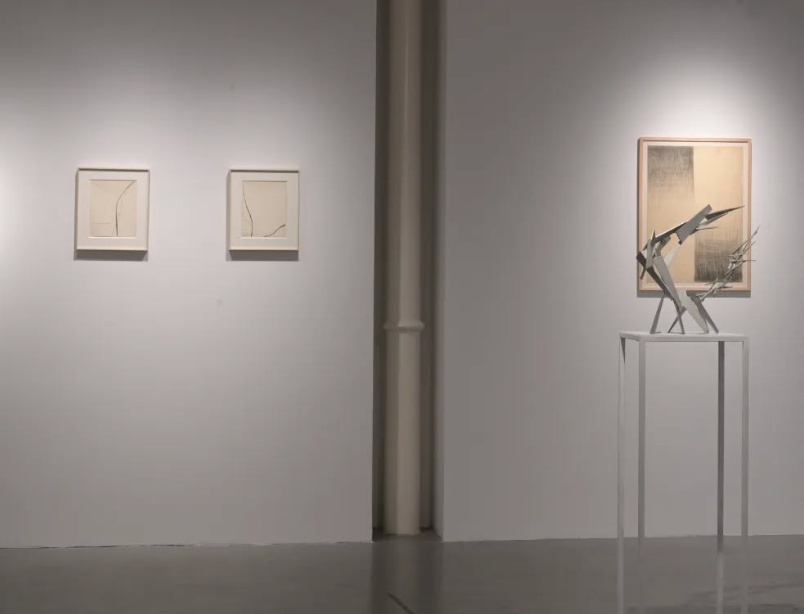
Magdalena Więcek – Glin. Sculptures and works on paper

September 20 – November 20, 2019

Olszewski Gallery. The exhibition as part of the Warsaw Gallery Weekend

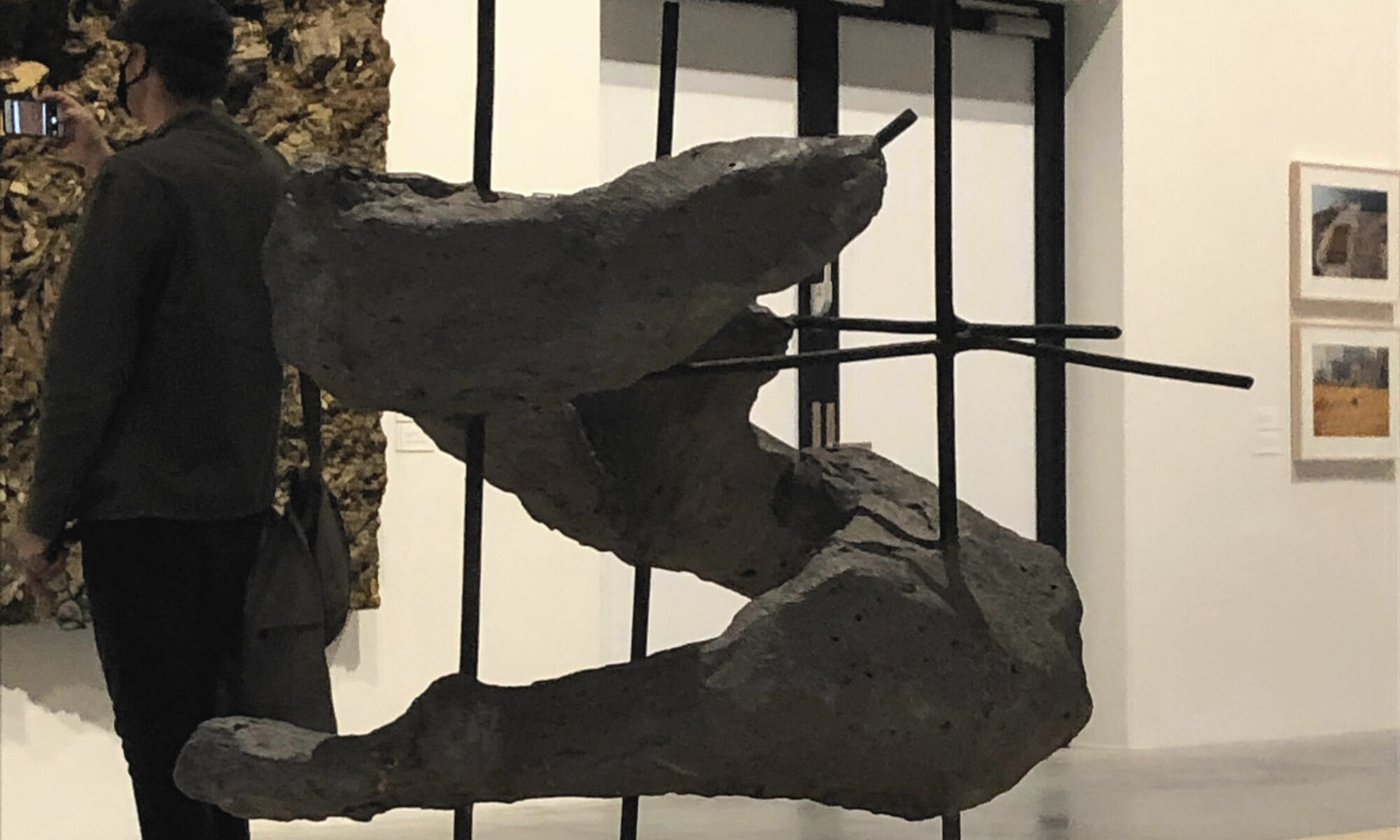
In 1807 the British chemist Sir Humphry Bartholomew Davy isolated a light silvery-white metal from clay. This unusual substance was then called argent d’argile by the French and Lehmsilber by the Germans. Nowadays, there are two names in Polish: glin is the name of a chemical element used in science, and aluminum describes a metallic material used in industry. Aluminum is the most common metal in the earth’s crust, but the ease with which it binds with oxygen meant that the properties of the pure element were not known to mankind until modern times. In the 1970s, when Magdalena Więcek’s metal sculptures were created, aluminum, at least in the countries which were behind the Iron Curtain, was still an exclusive symbol of modernity, and the use of this material in art was an avant-garde gesture.

The figure of a strong, independent woman artist was also thoroughly modern at the time. In Poland, as early as in the 1950s, a whole constellation of women sculptors remembered anew today began to come to the fore, to which Więcek also belonged. Their abstract form carries the timeless spirit of architecture. The intersecting arches are reminiscent of both the vaults of Gothic cathedrals and that of parabolic contemporary architecture. Like hanging roofs, the sculptural elements seem to be resisting the force of gravity.

The importance that the motifs of flight and transcendence had in Więcek’s work in the 1960s and 1970s is confirmed by the titles the artist gave to her sculptures from this period: Close to the Earth, Flight, Detachment, Flight, Horizons, Infinity, Sacrum. In this context an untitled work from 1967 – a strip of thick aluminum sheet bent into a dynamic knot – can be interpreted as a sculptural equivalent of aerobatics. The pilot making the loop experiences overloads, and the world stands on its head for a moment.

curator: Aleksander Wawrzyniak

The Penumbral Age. Art in the Time of Planetary Change

June 5 – September 13, 2020

The Museum of Modern Art in Warsaw

The title of the exhibition is drawn from the book The Collapse of Western Civilization: A View from the Future by Naomi Oreskes and Erik M. Conway (2014), where the protagonists from the future date the “period of the penumbra” from the “shadow of anti-intellectualism that fell over the once-Enlightened techno-scientific nations of the Western world during the second half of the twentieth century, preventing them from acting on the scientific knowledge available at the time” and leading to tragedy. We are witnesses to this process: scientific findings have ceased to be regarded as dispositive and do not persuade people to act.

Artista: Jonathas de Andrade / Isabelle Andriessen / Rasheed Araeen / Robert Barry / Kasper Bosmans / Boyle Family / Agnieszka Brzeżańska / Dora Budor / Vija Celmins / Center for Land Use Interpretation / Alice Creischer / Czekalska + Golec / Betsy Damon / Tacita Dean / Thierry De Cordier / Agnes Denes / Ines Doujak / Jimmie Durham / Jerzy Fedorowicz / Hamish Fulton / Futurefarmers / Cyprien Gaillard / Simryn Gill / Wanda Gołkowska / Guerrilla Girls / Małgorzata Gurowska / Anna & Lawrence Halprin / Mitsutoshi Hanaga / Suzanne Husky / Ice Stupa Project / INTERPRT / Anja Kanngieser / Karrabing Film Collective / Beom Kim / Frans Krajcberg / Susanne Kriemann / Stefan Krygier / Katalin Ladik / Nicolás Lamas / John Latham / Richard Long / Antje Majewski / Nicholas Mangan / Krzysztof Maniak / Qavavau Manumie / Robert Morris / Shana Moulton & Nick Hallett / Teresa Murak / Peter Nadin & Natsuko Uchino & Aimée Toledano / Bruce Nauman / Nishiko / Isamu Noguchi / OHO / Dennis Oppenheim / Prabhakar Pachpute & Rupali Patil / Maria Pinińska-Bereś / Agnieszka Polska / Ludmiła Popiel / Joanna Rajkowska / Jerzy Rosołowicz / Oscar Santillán / Gerry Schum / Bonnie Ora Sherk / Anna Siekierska / Rudolf Sikora / Magdalena Starska / Irv Teibel / Akira Tsuboi / Maria Waśko / Ryszard Waśko / Lawrence Weiner / Magdalena Więcek / Andrea Zittel

Curated by: Sebastian Cichocki, Jagna Lewandowska

Dimensions of reality: Female minimal

February 23 – June 20, 2020

Galerie Thaddaeus Ropac. Paris

This exhibition brings together fourteen pioneering women artists from Europe and the Americas, who each contributed in their original and uncompromising way to expanding the scope of the minimal aesthetics beyond the orthodox category of Minimal Art. Through a large selection of sculptures, installations, paintings and works on paper dating from the 1920s to the early 1980s, Dimensions of Reality: Female Minimal explores new perspectives and genealogies in the field of geometric abstraction, highlighting the complex and often subtle relationships between formalism and identity politics.

Artists: Feliza Bursztyn, Rosemarie Castoro, Maria Lai,  Liliane Lijn, Verena Loewensberg, Mary Miss, Kazuko Miyamoto, Lucia Moholy, Vera Molnar, Marlow Moss, Lydia Okumura, Lolo Soldevilla, Magdalena Wiecek, Shizuko Yoshikawa.

Curated by Anke Kempkes & Pierre-Henri Foulon.

PAS DE DEUX by Magdalena Więcek and Natalia Załuska

photo Christine König Galerie

November 22, 2018 – January 11, 2019

Christine König Galerie. Wien, Austria

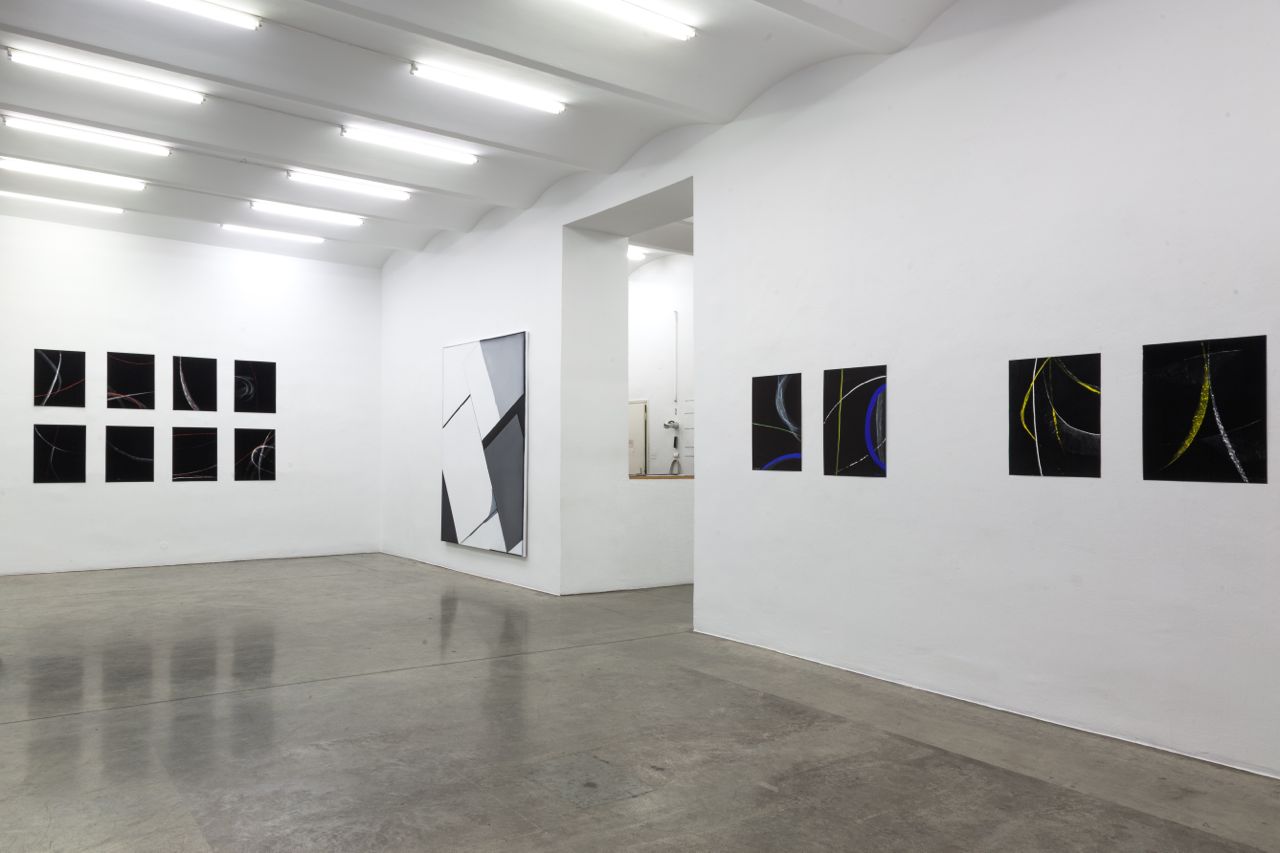
The conflation of the works by Magdalena Więcek and Natalia Załuska in the context of the exhibi-tion PAS DE DEUX is due to the cultural resonance chamber and frame of reference of their com-mon country of origin, Poland, as well as to the fascination of the young artist Załuska for the aes-thetic innovations of the 1950s and 1960s: Magdalena Więcek, who died in 2008, counted amongst the most significant sculptors of her country, yet had an impact far beyond its borders. Karl Prantl already invited her in 1963 to his legendary symposia. Her sculpture which was created at that time can still be seen in the quarry of St. Margarethen in Burgenland, Austria.